
Ruqyah Tips – Protect yourself from the Unseen
How does one protect oneself from unseen dangers? Let’s talk about Ruqyah, the forgotten Sunnah.
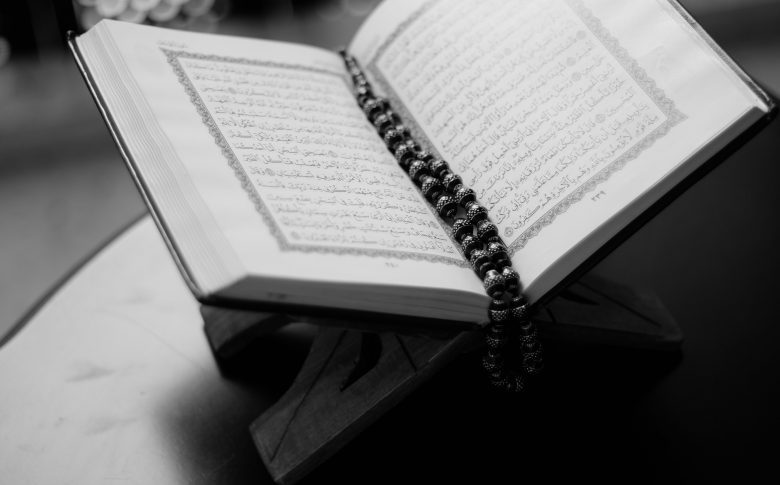
Ruqyah is the process of reciting ayāt of the Qur’an, certain athkār and/or du’as that the Prophet Muhammad (ﷺ) so beautifully taught us, either upon ourselves or another person. The aim is to seek a cure from Allah (ﷻ) from affliction, disease or suffering.
Recommended Ruqyah:
Ruqyah that is based on the Qur’an and the Sunnah. This is the type of Ruqyah that we should implement. The scholars have narrated that it should fulfill three conditions:
(1) That it is the speech of Allah or His name and attributes;
(2) That it is in the Arabic language, or another language whose meaning is understood;
(3) That the one performing the Ruqyah believes that it does not benefit in and of itself, rather that it is Allah Himself who causes the benefit.
In 2019, Sheikh Muhammad Tim Humble, a Ruqyah specialist from Dubai, visited South Africa to present the two-day Hidden in Plain Sight seminar. Hosted by Elevate, the seminar shed some light on evil eye, magic, jealousy and jinn possession.
Sheikh Muhammad shared some tips on how to protect yourself and how to engage in ‘Do-it-Yourself’ Ruqyah:
Getting Started
Be sincere with Allah and believe firmly that Allah is going to cure you or the person you’re doing it for. We must direct the Du’a for cure to Allah alone.
Recommendations
The entire Qur’an is a Shifaa; however, there are certain surahs that are preferred. Recite Surah Fatiha, Surah Baqarah and the three Quls. Thereafter, blow into your hands and wipe it over your body or blow over water and drink it. One can also recite over honey and eat it. It is imperative that we guard ourselves, especially in today’s fast-paced life where our lives are constantly being advertised on social media and witnessed by so many.
While we can’t always stop others from posting pictures and videos of us on the internet, what we can do is protect ourselves the Sunnah way.
In a hadith, Aa’ishah (RA) narrated that the Messenger of Allah (ﷺ) entered her home and there was a woman that Aa’ishah was treating or performing Ruqyah upon. He (ﷺ) said, “Treat her with the Book of Allah”. [Ibn Hibban]
It was narrated from Ali (RA) that he said, ” While the Messenger of Allah (ﷺ) was praying one night, he put his hand on the ground and a scorpion stung him, so the Messenger of Allah took it with his sandal and killed it. When he finished, he (ﷺ) said, “May Allah curse the scorpion! It does not leave a praying person, or anyone else” or he said, “It does not leave a prophet or anyone else”. Then he (ﷺ) called for salt and water, and he put it in a vessel, then he began to pour it over the finger that he was stung on, wiping over it and reciting over it with al-Mu’awwidhatayn“. [Ibn Abi Shaybah and others]
According to another narration, “He read: Surah Al-Kafirun, Al-Falaq, An-Nas”. [at-Tabaraani]
While it is permissible to seek out a Raqi (someone who performs Ruqyah) to do the Ruqyah for you or a family member, it’s more preferred that you do it yourself as you’re the one who wants the cure the most.
And Allah knows best.
For more du’as, refer to the book ‘Fortress of a Muslim‘, or browse the website www.duas.com.